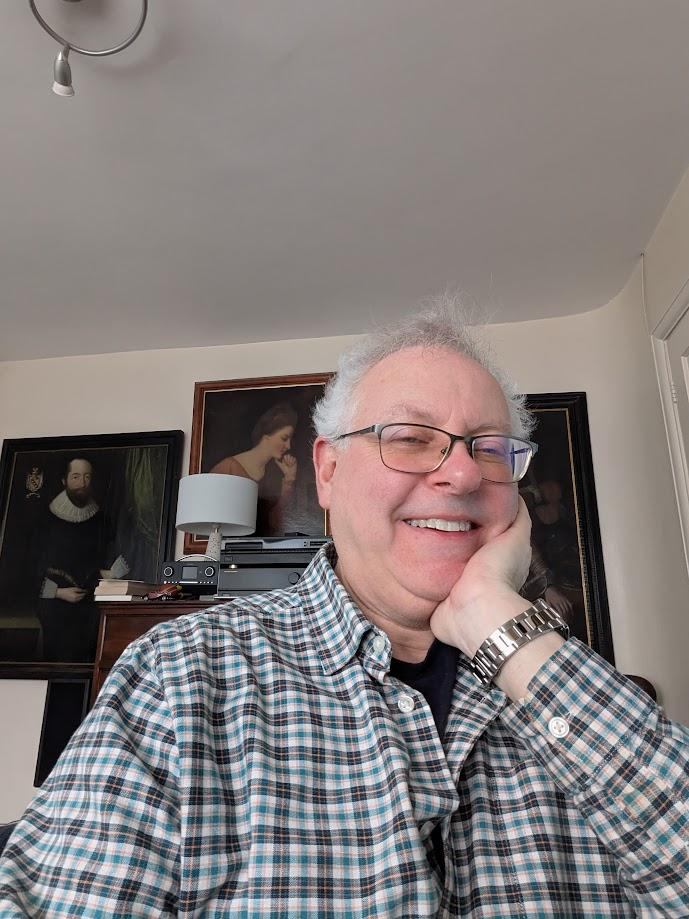
# Please introduce yourself and your book(s)!
Hi there. I’m Alex Pearl, and I live in the UK in North West London. Much of my working career was spent as an advertising copywriter, and I wrote my first novel almost by accident while I was waiting to be made redundant from a large failing agency that was merging with an even larger ailing giant. To occupy my time, I started to write a story for my kids. The merger took the best part of a year and was equated at the time to the Hindenburg coming to the rescue of the Titanic.
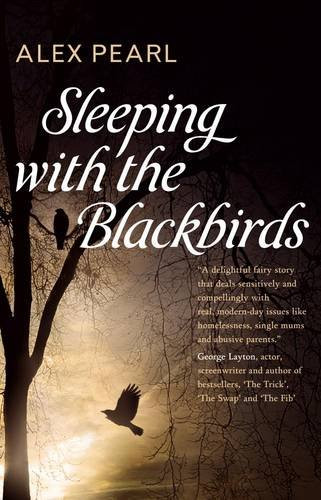
By the time I was finally given my marching orders, I had completed my first novel, an urban fantasy for children and young adults entitled Sleeping with the Blackbirds, which went on to get longlisted by the Book Viral Millenium Awards 2018, and was selected by the Indie Author Project for libraries across the US and Canada in 2019. Here’s the blurb:
Eleven-year-old schoolboy, Roy Nuttersley, has been dealt a pretty raw deal. While hideous parents show him precious little in the way of love and affection, school bullies make his life a misery. So Roy takes comfort in looking after the birds in his suburban garden, and in return, the birds hatch a series of ambitious schemes to protect their new friend.
As with the best-laid plans, however, these get blown completely off course – and as a result, the lives of both Roy and his arch tormentor, Harry Hodges, are turned upside down. While Harry has a close encounter with God, Roy embarks on a voyage of discovery that draws in and impacts on everyone around him, including the local police, his headmaster and the national media.
Where will it all end, and will life ever be quite the same for Roy Nuttersley?
You can view the trailer to the book here and listen to the dulcet tones of English actor Nigel Havers reading extracts here.
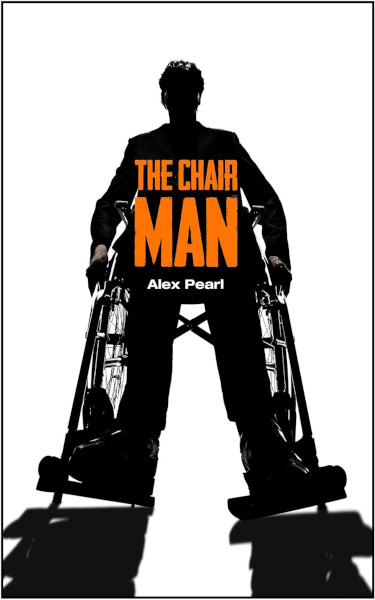
My second novel was a very different animal. The Chair Man is a very dark thriller. I had never come across a thriller that featured as its protagonist a tetraplegic in a wheelchair, so I decided to change all that.
Michael Hollinghurst is a successful corporate lawyer living a comfortable, suburban life in leafy North West London. But on 7 July 2005, his life is transformed when he steps on a London underground train targeted by Islamist suicide bombers. While most passengers in his carriage are killed, Michael survives the explosion but is confined to a wheelchair as a result. Coming to terms with his predicament and controlling his own feelings of guilt as a survivor conspire to push him in a direction that is out of character and a tad reckless. In a quest to seek retribution, he resorts to embracing the internet and posing as a radical Islamist in order to snare potential perpetrators. Much to his surprise, his shambolic scheme yields results and is brought to the attention of both GCHQ and a terrorist cell. But before long, dark forces begin to gather and close in on him. There is seemingly no way out for Michael Hollinghurst. He has become, quite literally, a sitting target.
The book was a Finalist in the Wishing Shelf Book Awards 2021.
My next book was a far lighter yarn and is classified as a comic murder mystery with the emphasis on humour rather than procedural crime. It’s set in the London advertising world of 1983. Here’s the blurb:
WORKING IN ADVERTISING CAN BE MURDER – LITERALLY.
It’s 1983. Margaret Thatcher has been waging war on the Argentinians in the Falkland Islands. The miners are about to wage war on Margaret Thatcher. And Angus Lovejoy, once sent down from Charterhouse for shagging the Chancellor’s daughter in the cricket pavilion, has now landed himself a job as a copywriter at London adland’s creative hot shop Gordon Deedes Rutter where he is teamed up with art director Brian Finkle whose neurotic Jewish parents are the bane of his life. The two are an unlikely duo, but their mischievous and sardonic take on the world makes them a brilliant creative team. Everything goes swimmingly until a bizarre and mysterious murder rocks the world of Gordon Deedes Rutter and ripples out into the national media. While the dearth of evidence leaves the police baffled, Lovejoy and Finkle take it upon themselves to apply their creative brains to solve the mystery, and in so doing, inadvertently get themselves into particularly deep water.
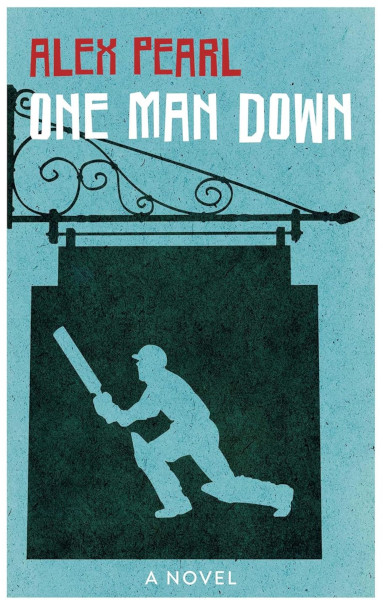
The sequel, One Man Down was taken up by Roundfire Books. The blurb to this book is as follows:
THE TALE OF A STUMPED POLICEMAN, A THIRD MAN, AND A WELL-PLACED SHOT.
It’s 1984. Princess Diana has just given birth to her second child. The legendary comic Tommy Cooper has died on stage (quite literally). And Angus Lovejoy and Brian Finkle are gloriously oblivious to it all as they strive to enthral the nation with their television commercials for the advertising agency Gordon Deedes Rutter. But all is not as rosy as it might seem in the frenetic world of Soho. Following a disastrous presentation to a manufacturer of diarrhoea tablets, Lovejoy and Finkle let off steam by playing cricket for an old school friend – but in doing so, stumble upon a nest of vipers involving a gay vicar, a small-time antique fraudster, a photographer, and blackmail. There can only be one outcome and it’s going to entail murder.
I have also written two non-fiction titles:
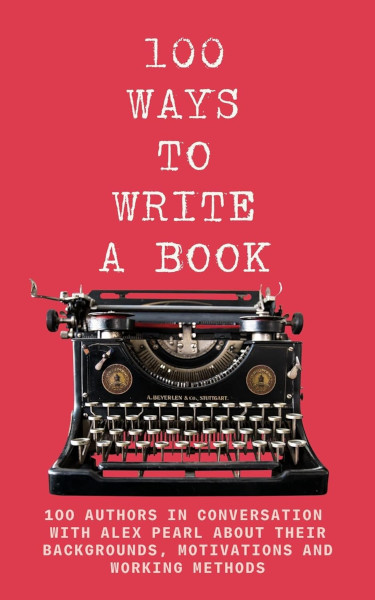
100 Ways to Write a Book is a compilation of 100 author interviews I conducted over the internet during Covid. Here’s the blurb:
These author interviews initiated by Alex Pearl during the Covid epidemic started as a small lockdown project. But before long, Alex’s requests for author interviews on social media elicited an overwhelming response, and the project soon took on on a life of its own. Within these pages, authors from a wide spectrum of backgrounds wax lyrical about their backgrounds, motivations, and working methods. Among this throng, self-published newbies rub shoulders with award-winning bestsellers from all corners of the globe, including the UK, the US, Canada, Australia, Germany, New Zealand, Israel and Sri Lanka. They provide a fascinating insight into this mysterious process of creating imagined worlds on the page.
Huge thanks go to the 100 authors who very kindly gave their time to participate in this project, as well as their consent for their words to be reproduced here in print. They are in no particular order: Paul Waters, Jessica Norrie, David F. Ross, Drema Drudge, Chris Chalmers, Mark Farrer, Sue Clark, Hannah Tovey, Belinda Hunt, Glynn Holloway, Mark Eklid, Julian Dutton, Christopher Bowden, Alan Gibbons, Lily Mackenzie, Ian Critchley, Jadi Campbell, Tom Atkins, Jane Risdon, Charles Harris, L. C. Tyler, Fran Hill, Malcolm Knott, Nikki Dudley, Jacqui Castle, Ron Impey, C. J. Booth, Ashok Ferrey, Jennifer Irwin, Beth Duke, Vicki Olsen, Pete Langman, Pauline Morgan, Jonathan Peace, Sandy Manning, Shelley Wilson, P. J. Roscoe, Anthony Neil Smith, A. A. Chaudhuri, Jon Richter, Carolyn Hughes, Trish Moran, Madeline Dewhurst, Jeff Pollak, Louise Fein, A. B. Kyazze, Jack Byrne, M. A. Hunter, Tessa Harris, M. J. Mallon, P. R. Black, Nina Soden, Bill Arnott, E. Chris Ambrose, Paul Kane, Sam Blake, Douglas Skelton, Louise Mumford, Philip Henry, Hazel Prior, Lauren Emily Whalen, Laura E. Goodin, Simon Van der Velde, Dr. Manuel Matas, Jane Bettany, Regina Puckett, S. G. M.Ashcroft, Michele Kwasniewski, Judy Stanigar, Robert Craven, John Darling, Pramudith D. Rupasinghe, Richard Dee, Sophy Layzell, Lorna Dounaeva, Diana Stevan, Bradley Harper, Paul Gitsham, Sion Scott-Wilson, John Dean, Liz Martinson, C. J.Carver, Tony J. Forder, Sharron L. Miller, Patrick Osborne, Peter Turnham, Jude Lennon, Anna Holmes, Chris Calder, Jane Buckley, Rachel Brimble, Gail Aldwin, Anne Coates, Ian Riddle, Christina Hamlett, James Morgan-Jones, Alison Huntingford, Gila Green, Helen Pryke, Emilya Naymark, Marcia Clayton, James L’Etoile, Edward Trayer, Mark Leichliter, Lindsay J. Sedgwick, David Liscio, Kate Reynolds
ALL AUTHOR PROCEEDS WILL BE DONATED TO PEN INTERNATIONAL
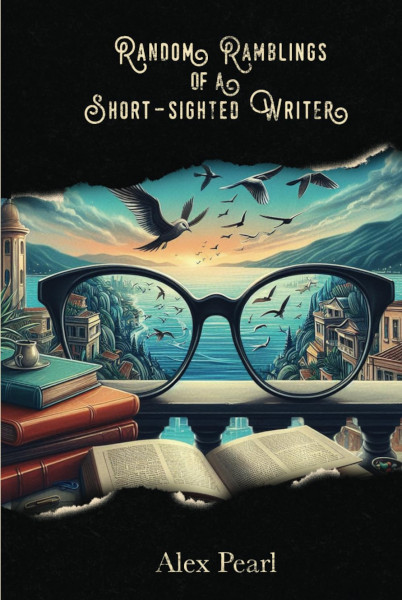
Random Ramblings of a Short-sighted Writer is a collection of essays, some of which appeared on the pages of The Huffington Post. Here’s the blurb: “This eclectic selection of pieces penned by the author Alex Pearl won’t fail to move and amuse. Many originally appeared on his website as well as the pages of The Huffington Post. This new updated edition includes more recent articles and is fully illustrated. Whether conveying the eccentricities of village cricket, the quirkiness of British advertising, or the surprising hospitality of hotels in North Korea, Pearl’s prose will draw you in and leave you wanting to come back for more.” Hugh Salmon, playwright and co-founder of Lovereading.co.uk
I have also contributed to three anthologies:
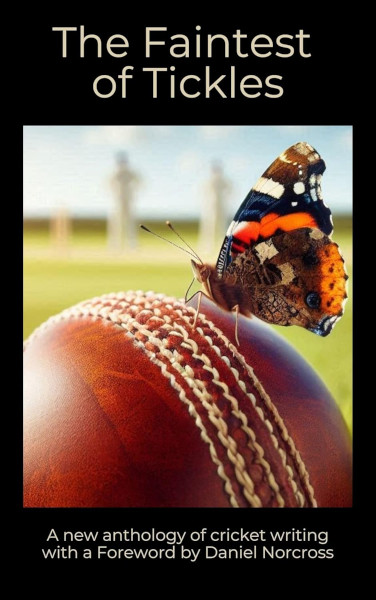
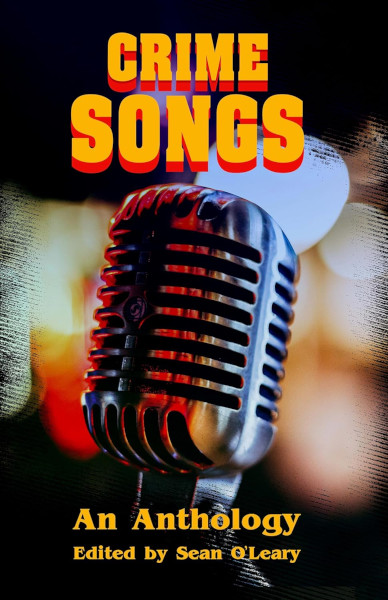
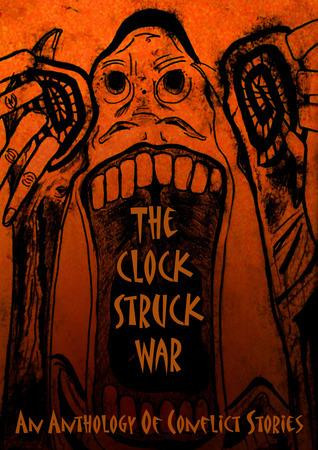
The Clock Struck War – a collection of short stories to mark the centenary of the First World War. The Faintest of Tickles – a new collection of cricket writing with a Foreword by Daniel Norcross. Crime Songs – a collection of crime shorts inspired by popular songs.
Trailer for Sleeping with the Blackbirds: https://booksbyalexpearl.weebly.com/sleepingwiththeblackbirdstrailer.html
Reading of extracts by actor Nigel Havers: https://alexpearl.bandcamp.com/album/sleeping-with-the-blackbirds

# What is/are the real-life story(ies) behind your book(s)?
There are elements of real stories and real characters behind all my books. Some more so than others. To begin with, my first book Sleeping with the Blackbirds features a disabled gardener who uses his gardening tools and a bicycle as crutches to move about on. And the character is drawn from reality. This man actually lived and breathed in the real world of my childhood. He was the gardener my parents employed, and he was a wonderful gardener. And like the character in my book, he was a wartime hero. As an ARP man, he rescued people from bombed-out houses during the Blitz.
While my second book, The Chair Man, doesn’t feature characters that are based on real people, its protagonist is a wheelchair user, and my knowledge of wheelchairs and spinal injuries is extensive since my wife is a wheelchair user, so much of this knowledge was obviously very helpful.
For my third and fourth books, I shamelessly plundered my past experiences in the advertising industry and drew on a number of real characters and incidents. In most cases, I have changed the names. But both books include well-known names in the public domain. Julian Clary, the comedian, for instance, has a part in One Man Down, and he very kindly approved two pages of fictitious dialogue for his alter ego before I sent it to the publisher.
# What inspires/inspired your creativity?
I think I was inspired at school by a very radical and charismatic English teacher named Clive Lawton, who turned everything on its head, including the syllabus, and very effectively demonstrated the power of words and ideas, and got his class to think. Then, when I entered the advertising industry as a copywriter, I was captivated by an early creative director, Ken Mullen, who was a brilliantly inventive and amusing writer with two degrees from Oxford. While working here, I was also fortunate to sit next to the novelist, Beryl Bainbridge, at an advertising awards dinner. Ken had created with his art director, Tony Muranka, a press advertising campaign for real fires featuring pieces of commissioned writing by famous authors. The only words Ken penned were for a discreet headline that read ‘Pictures I see in my fire.’ Beneath it, Beryl wrote a delightful semi-autobiographical piece about her childhood in that inimitable style of hers. She had been nominated for an award for the Best Written Press Advertisement of the year. And of course, she won it. Had it been anyone else, I might not have had the courage to drum up conversation. But Beryl was so lovely and down-to-earth with no airs and graces that I ended up chatting away to her as if she were an old friend. And I can still distinctly remember her scribbling in her notebook every time she heard something interesting. “If I don’t write it down, it will just evaporate like a dream,” she explained. Looking back on that experience now, I can say with some certainty that she inspired me and probably helped plant those seeds in my head that perhaps one day I’d sit down and try to write fiction.
# How do you deal with creative block?
My problem isn’t so much creative block as distraction and procrastination. When, for instance, I was researching for The Chair Man, I’d spend endless hours disappearing down rabbit holes and reading stuff that wasn’t really relevant. I guess this is an occupational hazard faced by many writers. But thankfully, in my case, I’m fortunate that I’m not relying on financial remuneration for my writing, so I can afford to be fairly disorganised and erratic. For years, I wrote under pressure of deadlines in the advertising industry. Now it’s a luxury to have time and space and no pressure.
# What are the biggest mistakes you can make in a book?
For me, a big mistake for any writer is to think they can write to a formula. There are countless books on the market that will tell you otherwise. But don’t believe a word of it. Like anything in life, you will only succeed if you stay true to yourself. Original ideas count for everything. And these can only be found in the deep recesses of your head, not some ‘How to’ manual.
# Do you have tips on choosing titles and covers?
A good title can seem deceptively simple. The best ones are memorable and give a hint about the gist of the book. Like a good ad, a succinct title and image can deliver a short, sharp message that will resonate with readers. And it’s particularly pleasing when the image gives the words a completely different meaning. The Chair Man is a good example. The words rely entirely on the stark silhouette of a man in a wheelchair to work. A Brand to Die For works in a similar way with a consumer barcode in the shape of a revolver, suggesting that the term ‘to die for’ actually means to die for.
# How do bad reviews and negative feedback affect you and how do you deal with them?
You have to bear in mind that all reviews are subjective and that there will always be elements of your books that will resonate with some readers and not with others
. Some people love backstories and plenty of detail about characters’ backgrounds. Others don’t give a fig for all that and want the story to move forward at a brisk rate. As someone once said, you cannot please all the people all of the time. So in this sense, negative reviews are fine, and I can relate to them. The only reviews that are perplexing are those that just don’t make any sense. One said that she was looking forward to reading the book, but was deterred by all the numbers and symbols that appeared in the text. This comment really threw me, as all my books are professionally typeset and formatted. I could only conclude that she was either reading a different book, was reading on a faulty device, or was completely round the twist.
# How has your creation process improved over time?
I’m not sure that it has. Put it this way, I find the process no easier. And I wouldn’t expect it to. The hardest part for me has always been coming up with a storyline that is compelling, convincing, and works. This can take forever and is truly challenging. Once I have written a detailed synopsis and have a road map in place, writing it is the relatively easy and by far the most enjoyable bit. I suspect that a lot of writers will say the same.
# What were the best, worst and most surprising things you encountered during the entire process of completing your book(s)?
One of the best things about the process is getting the storyline right before writing a single word. As I said earlier, it is for me the most challenging aspect of writing fiction. But it’s quite a moment when you have worked it all out, and everything falls into place, and the ending is both credible and unpredictable. It’s like cracking a code or working out a puzzle.
Now this may sound a bit strange, but sometimes the worst part of the process is finishing the thing. That’s because I actually enjoy investing time in the characters I create and the world in which they live and breathe. So when I finish writing, I can feel bereft for a short while.
One of the most surprising things that can happen is when one of your characters does something that wasn’t planned in the synopsis. This happened when I was writing The Chair Man and one of my main characters went a bit mad and killed his colleague. It took me aback when I wrote it, so would almost certainly have done the same for the reader. But life is unpredictable and fragile, so reflecting this is no bad thing.
# Do you tend towards personal satisfaction or aim to serve your readers? Do you balance the two and how?
I have always written to entertain myself on the basis that if I can manage to keep myself reasonably entertained, I might just stand a glimmer of a chance of entertaining the reader. When I was an advertising copywriter, we always had to write for a specific audience and adopt a suitable tone of voice. The great thing about writing fiction is that you can throw all that out of the window. You are the boss; you set the tone, the style, the narrative. You play God.
# What role do emotions play in creativity?
That’s an interesting question. They can and do play a role as far as I’m concerned. If my protagonist comes to a sticky end, writing this can be a bit emotional. After all, you have lived with the character, got to know him pretty well, and understood his motivations and foibles. You should feel a twinge of emotion; you should get goosebumps when something rotten happens to him that is completely out of his control. Put simply, if you shed a tear, there’s every chance that your readers will, too.
And this applies to short stories as well. The first short story I had published was entitled Scared to Death, which was a fictionalised account of the sad tale of Private Thomas Highgate, who was the first British serviceman to be executed for cowardice during the First World War. Writing that final scene was upsetting and quite emotional. And I’m sure that’s why it was chosen along with 23 other short stories by the publisher for its anthology The Clock Struck War to mark the centenary of the First World War.
# Do you have any creativity tricks?
As much as I’d like to say I have, I’m afraid I don’t. Writing fiction isn’t easy. There are no shortcuts as far as I can tell. But that is the beauty of it. So many things in life are difficult to master, but the satisfaction of doing so is what makes it worth all the effort. Whether you paint, write, compose, play, or act, you have to throw your heart and soul into it.
# What are your plans for future books?
I am currently contributing to and compiling with my brother a second anthology of cricket writing entitled Following on, and I’m working on a third novel in my Lovejoy and Finkle murder mystery series. I also have a plan to write a sequel to The Chair Man. This will be The Air Man.
# Tell us some quirky facts about yourself
The one that is widely used is the fact that I was once inadvertently locked in a record shop on Christmas Eve. I was a teenager at the time and was quite probably the only customer who ever bothered to look for recordings of classical music tucked away at the back of the shop – an area that was out of sight. So, when on this particular Christmas Eve, I was desperately searching for the chamber works of Joseph Haydn, the staff, eager to get home for the festive period, locked up without checking the entire shop. Little did they know that they had locked in Gants Hill’s youngest and quite likely only Joseph Haydn fan. Fortunately, the shop had a phone, so I called home and spoke to my father, who in turn spoke to the police, who tracked down the caretaker. Three hours later, I was released from my temporary prison. And the following day, all the staff were summarily fired, which couldn’t have been much of a Christmas present.
Another of my creative pursuits is painting. I produce large abstract paintings on glass. And many years ago, I sold a painting to a very well-spoken gentleman who was a senior accountant at the Serious Fraud Office. He requested that I deliver the painting to his workplace, which I did, and after hanging the painting in his office, went in search of the Gents, and unfortunately, in doing so, stepped into a highly sensitive no-go zone, which set off all the alarms and sent security men running. The story doesn’t end there. Some years later, I discovered that this well-spoken gent was wanted by the Metropolitan police for – wait for it – fraud.