# Please introduce yourself and your book(s)!
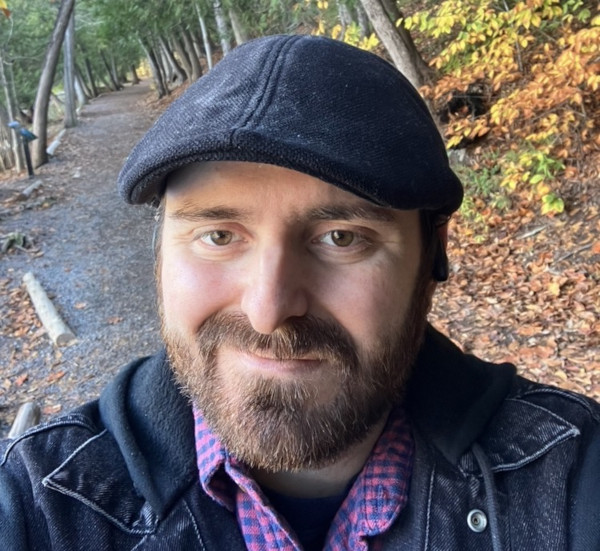
I’m Matt Buonocore, a poet based in New York. I write about compassion, fear, love, and the experience of trying to understand ourselves while life keeps changing around us.
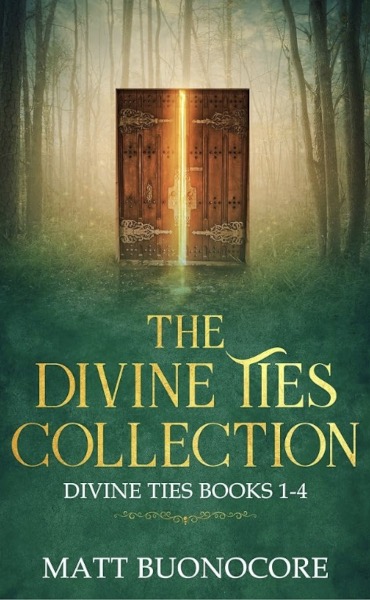
My books include Our Love Is the Cure, Soothe the Soul, The Magic of the Moment, and The Divine Ties Collection, which brings together the first four books in that collection. My poetry uses direct language because I want people to be able to enter it without feeling that they need to solve something first.
I hope a reader might find a line that stays with them during an ordinary day, or words for a feeling they haven’t quite been able to express. Sometimes that small moment of recognition is what makes a book matter to us.
# What is/are the real-life story(ies) behind your book(s)?
I began writing poetry in my early twenties. Reading and meditation had become important parts of my life, and writing emerged from that period of paying closer attention to what I was feeling and experiencing.
The books grew out of that process. They contain questions I’ve lived with about fear, belonging, and the ways we treat ourselves and one another. I haven’t written them from a place of having everything figured out. Often, writing is how I discover what I’m trying to understand.
One experience that has stayed with me was hearing from a woman living with lupus who said my poetry had helped her. There is something extraordinary about writing alone and later discovering that those words reached someone in circumstances you could never have anticipated. It reminded me that I can’t know the whole life of a poem once it leaves my hands.
# What inspires/inspired your creativity?
Reading, walking, conversations, and the things I notice when I stop rushing to the next thing.
I spend a lot of time outdoors. Walking gives my attention somewhere to settle, and I often find that a thought becomes clearer when I’m moving without trying to force an answer.
My wife, Alaina, is also a poet. Sharing a life with someone who understands the impulse to write is meaningful to me. We each have our own voice, but creativity is something we can recognize and encourage in one another.
I’m especially drawn to ordinary experiences that become more complicated the longer you sit with them. A moment of kindness, an uncomfortable feeling, or something someone says casually can give me more to think about than a dramatic event.
# How do you deal with creative block?
I try to give myself some room. The more desperately I demand a poem from a particular moment, the harder it can become to hear what is actually there.
Walking and reading help. So does allowing myself to have an experience without immediately turning it into writing.
I also try to distinguish between having nothing to say and being dissatisfied with the first way I’ve said it. Sometimes I need a break. Other times I need to stay with an imperfect beginning long enough to discover where it might lead.
# How do bad reviews and negative feedback affect you and how do you deal with them?
They can hurt. When you’ve put something personal into a book, it takes effort to remember that a response to the work isn’t a complete judgment of you.
I try to look for anything specific I can learn from. A reader might identify something unclear or repetitive that I was too close to notice. That is worth considering, even when it’s uncomfortable.
There are also differences in taste. Direct, emotionally open poetry will speak to some people and leave others unmoved. I want to remain open to criticism while still understanding why I write the way I do. Otherwise, I could spend my whole life chasing a version of the work that nobody could dislike—and lose my own connection to it.
# How has your creation process improved over time?
I have more writing behind me now, which means I have more opportunities to recognize my habits. I can look across different books and see the questions I keep returning to, as well as the places where I need to explore further.
I’m also learning that producing the work and sharing it require different kinds of effort. Writing feels natural to me. Reaching out, introducing myself, and advocating for my books have asked me to develop a different form of persistence.
That has become part of my growth as an author: learning how to help the work find readers while preserving the attention and balance that allow me to keep writing.
# Do you tend towards personal satisfaction or aim to serve your readers? Do you balance the two and how?
The writing has to begin with something I feel connected to. If I’m trying to manufacture a response from a reader before I’ve discovered what I want to say, the work becomes less honest.
But I do care about the person who will eventually read it. I want the language to offer them a way in.
Making some of my books available through free Kindle editions has been one way of helping people explore the work. I like the possibility that someone who wouldn’t ordinarily buy poetry might give it a chance.
The balance is something I’m still learning. I want to write work I believe in and make it available to the people it might mean something to.
# What role do emotions play in creativity?
Emotions often give me the first reason to write, but I don’t always understand them when I begin.
A feeling can seem simple until I spend time with it. Fear might contain grief. Anger might be protecting something vulnerable. Love can include uncertainty, frustration, and the difficulty of accepting that we cannot control what happens to another person.
Writing lets me examine those experiences with more patience. It also reminds me how much we share. The details of our lives are different, but a reader can recognize a feeling in a poem and bring their own experience to it.
# What are your plans for future books?
I have an unpublished poetry manuscript called All the Lives I’ve Been, and I’m developing another collection with the working title The Beautiful Absurdity of Being.
I’m also working on a book with my grandmother that grows out of our real conversations and our experience of dementia together. Preserving her voice matters deeply to me. There is humor and affection in those conversations, alongside difficult things, and I want the book to make room for all of that.
Across these projects, I’m interested in continuing to develop my writing while staying attentive to the lives and experiences that give it meaning.
# Tell us some quirky facts about yourself.
I’m left-handed, I hike a lot, and I enjoy lifting weights. Poetry and a heavy deadlift may look like an unusual combination, but both are regular parts of my life.
I also once opened a small bookstore called Little Light in Weed, California. It was a brief chapter, but books have found their way into my life through several different doors.
People sometimes assume I’m more extroverted than I feel. I enjoy a good conversation, but I’m often happiest listening—or walking somewhere with enough quiet to follow a thought.
Where readers can find my work
Explore my books:
https://mattbuonocore.com
The Divine Ties Collection (Books 1–4), currently free on Kindle in the US:
https://www.amazon.com/dp/B07PDBM6RG