# Please introduce yourself and your book(s)!
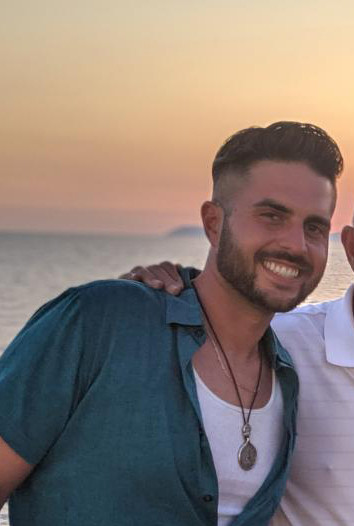
I’m Beau James Thomas, a California artist, author, and art educator. I earned a BA in Visual & Public Art at California State University, Monterey Bay, and an MFA in Studio Art at Mills College. My Hidden Art History books explore the creative histories that live in ordinary places, while my arts-education writing asks how we can help people trust their own curiosity and begin making things. I also work in public art, sculpture, photography, and painting, so writing is one part of a larger creative practice.
# What is/are the real-life story(ies) behind your book(s)?
They often begin with a physical place and a question. When I paint in public spaces, I notice the people who pass by, the changes in light, and the layers of decisions that shape what a neighborhood looks like. That made me curious about who gets remembered in a place’s artistic history, whose contributions are overlooked, and how art continues to live outside galleries. The books are an extension of that curiosity.
# What inspires/inspired your creativity?
Unexpected details that I might have walked past on another day: color on a concrete wall, a weathered object, a strange bit of local history, or someone’s individual way of seeing. I love the moment when a familiar place becomes unfamiliar again because I’ve learned something new about it.
# How do you deal with creative block?
I give myself a small task rather than waiting for a complete idea. I might describe one object, make one sketch, collect three questions, or rewrite a paragraph in plain language. The first useful mark is usually more important than the perfect opening.
# What are the biggest mistakes you can make in a book?
Trying to sound certain when the subject calls for questions; repeating an idea because you like the wording; and forgetting the reader’s experience. In nonfiction, another serious mistake is allowing an attractive story to outrun what can actually be supported. I try to separate interpretation from evidence and make the journey clear.
# Do you have tips on choosing titles and covers?
A title should promise a compelling experience without misrepresenting the work. I look for a phrase that creates curiosity, then make sure the subtitle tells readers what the book is about. A cover needs to communicate at a glance, particularly at thumbnail size. My visual-art background helps me think about the relationship between image, contrast, lettering, and mood.
# How do bad reviews and negative feedback affect you and how do you deal with them?
I try to distinguish a difference in taste from a problem I can fix. Not every book is for every reader, but a thoughtful criticism about clarity, pacing, or accuracy is worth examining. I don’t want to become so protective of a book that I stop learning from it.
# How has your creation process improved over time?
I’ve become more deliberate about organizing material and asking what each section contributes. I think harder about the order of ideas, the reader’s questions, the provenance of historical information, and when a passage needs cutting instead of expansion. Working in several mediums has also taught me that revision is a form of making, not an admission that the first attempt was a failure.
# What were the best, worst, and most surprising things you encountered during the entire process of completing your book(s)?
The best is discovering a connection that changes how I see a place. The hardest part is knowing when to stop gathering fascinating material and shape it into a coherent book. The biggest surprise is how often a small question about an artwork leads to a much larger question about public memory, education, or community.
# Do you tend towards personal satisfaction or aim to serve your readers? Do you balance the two and how?
Both matter. Curiosity gives me a reason to start, but a reader needs a reason to continue. I can write about a subject that fascinates me and still ask whether the next page offers something useful, revealing, or emotionally resonant for someone encountering it for the first time.
# What role do emotions play in creativity?
Emotion creates attention. Wonder, grief, humor, affection, and discomfort all change what we notice. In art and writing, I want emotion to deepen the work without replacing careful observation or factual responsibility.
# Do you have any creativity tricks?
I change the scale of the problem. If a chapter feels too big, I’ll reduce it to one scene or object. If an image feels stalled, I’ll look at its simplest shapes. I also ask, “What would a curious child notice here that an adult has learned to ignore?”
# What are your plans for future books?
I’m developing An Island Made of Dreams, a Hidden Art History volume about Catalina Island and the images and artistic histories that have shaped its identity. I’m also interested in more writing at the intersection of public art, local history, and arts education, especially projects that give readers practical ways to look at their own communities more closely.
# Tell us some quirky facts about yourself.
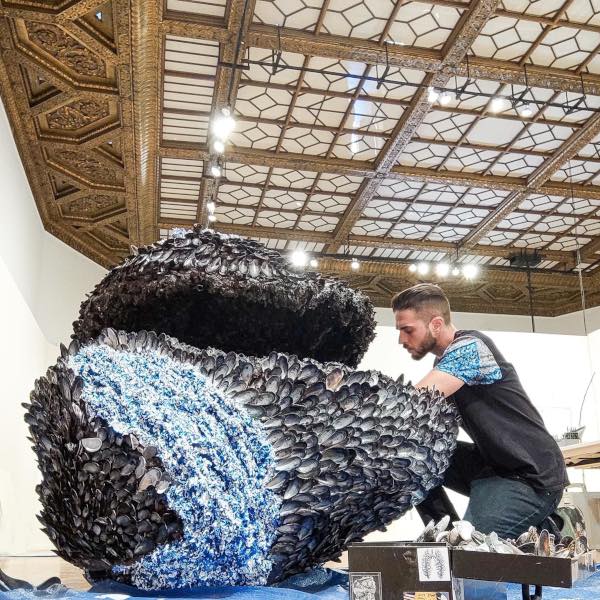
I’ve made art on objects most people normally walk past, including utility boxes in Dublin, California. I studied sculpture and continue to work in photography and painting alongside books. An ordinary street corner can become a research question for me, and a research question can become a painting.
Links
Author and books: https://www.AuthorBeauThomas.com
Art, background, and portfolio: https://www.BeauThomasArt.com